
Gymnocladus dioicus (Kentucky coffeetree)
2 Gallon
Kentucky coffeetree can be a useful landscape tree, prized for its large leaves and its tolerance for urban conditions. It reaches 60–80' in height and about 50' wide. At 10–15' high, it typically separates into three or four divisions which spread slightly and form a narrow pyramidal head; or when crowded by other trees, sending up one tall, central branchless shaft to the height of 50–70'. It is dormant for half the year, so one of its common names is Stump Tree. Female coffeetrees have showy white blooms in May and June and produce seed pods in October. Historically, these pods were said to have been roasted and ground to produce a noncaffeinated coffee-like beverage. The Kentucky coffeetree prefers full sun and can tolerate poorer soils, as long as they are well-drained. Can be a useful alternative to ash and elm trees because it is a tough tree not subject to pests or disease. Note: We cannot guarantee whether a plant is male or female.
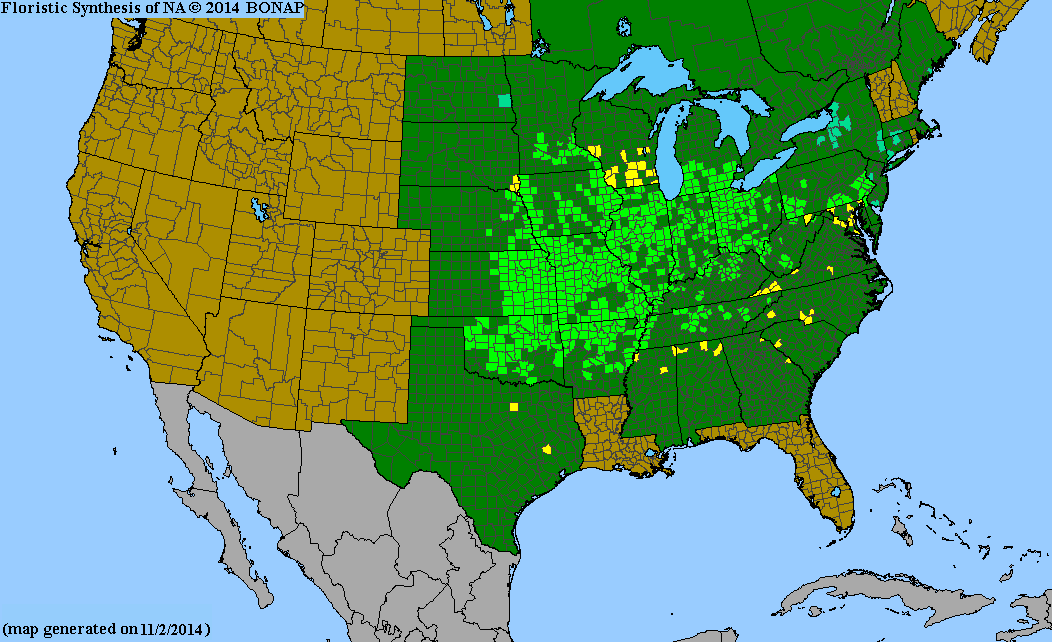
This tree is native to much of eastern North America. It is typically found on alluvial soils of river and flood plains and nearby terraces. Birds nest in the tree. Considered a rare tree species because it is widely distributed but typicallly as widely dispersed individuals or small colonial groups. Bees visit the flowers for nectar and pollen. The tree is a larval host for two species of honey locust moths. The leaves, seeds, and pulp are poisonous and toxic to humans, pets, and livestock.
BONAP Native Range Map. Bright green indicates native to the county, dark green indicates native to the state.
